/
Integrating Generative AI into SaaS: A Technical Blueprint
R
Rohan MehtaMay 16, 20266 min read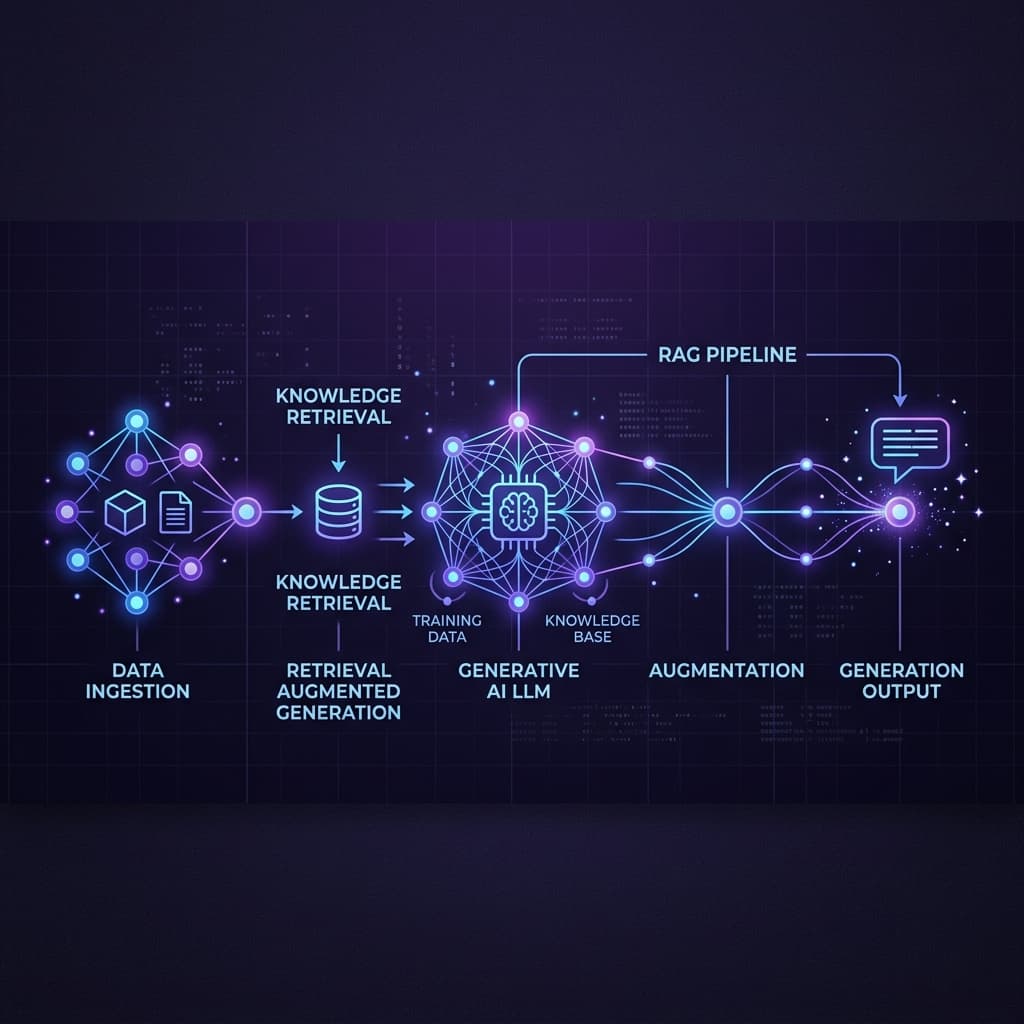
Beyond the Wrapper: True AI Integration
In the early days of the AI boom, many "AI Startups" were simply thin wrappers around the OpenAI API. Today, users demand deep, contextual integration. They want AI that understands their proprietary data, operates within their workflows, and takes autonomous actions.
For enterprise SaaS platforms, this requires a sophisticated technical architecture. If you are looking to hire AI developers in India, ensure they understand the principles of Retrieval-Augmented Generation (RAG) and Agentic workflows.
The Architecture of a Smart SaaS
1. Vector Databases & Embeddings
To make an LLM aware of your user's specific data (e.g., their past invoices, customer support tickets, or internal documentation), you must convert that text into vector embeddings using models like text-embedding-3-small. These high-dimensional arrays are stored in specialized vector databases like Pinecone, Milvus, or pgvector.
2. The RAG Pipeline
When a user queries your SaaS, the system shouldn't just pass the prompt to an LLM. Instead:
- The user's query is converted to an embedding.
- The system performs a semantic search against the vector database.
- The top 5 most relevant data chunks are retrieved.
- These chunks are injected into the LLM's system prompt as context.
- The LLM generates a highly accurate, hallucination-free response based strictly on the retrieved data.
3. Agentic Workflows with LangChain/LlamaIndex
Modern AI integration goes beyond chatbots. By leveraging frameworks like LangChain, developers can build agents that have access to "Tools." For example, an AI agent could read an incoming email, decide to query a Stripe API for payment history, generate a refund, and reply to the customer—all autonomously.
Why Outsource Your AI Development?
AI moves fast. The state-of-the-art model changes every few weeks. Maintaining an in-house team of specialized AI/ML engineers is incredibly expensive and notoriously difficult to retain in competitive markets like San Francisco or London.
By choosing to outsource AI Chatbot and Agent development, you instantly access a team that is building with these bleeding-edge tools every single day.
Getting Started
Integrating generative AI doesn't have to require a massive overhaul of your legacy systems. At DelhiStack, we often start with isolated microservices that connect to your existing databases.
Ready to make your SaaS intelligent? Contact us to hire a dedicated AI squad and let's architect the future.
Enjoy our content?
Add DelhiStack as a preferred source on Google Search.