/
React Native vs Flutter: The 2026 Performance Showdown
T
Tarun KumarMay 17, 20265 min read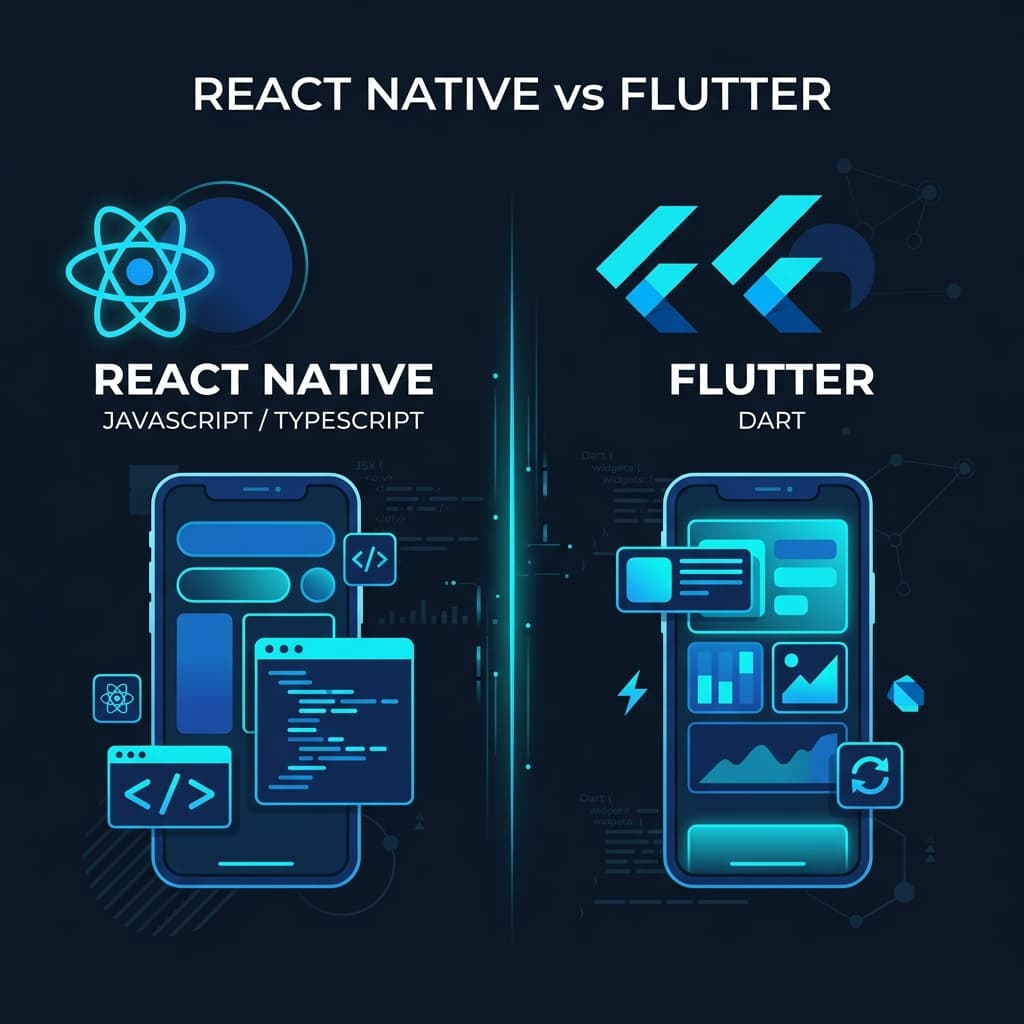
The Cross-Platform Dilemma
When startups decide to build a mobile application, the first major technical decision is the framework. Building native iOS (Swift) and Android (Kotlin) separately is a luxury few early-stage companies can afford.
The debate inevitably narrows down to the two titans of cross-platform development: React Native (Meta) and Flutter (Google). If you are looking to hire React Native developers in India or hire Flutter developers, understanding their architectural differences is critical to your project's success.
1. Architectural Differences
React Native: The JS Bridge (and beyond)
Historically, React Native relied on a JavaScript Bridge to communicate with native OEM widgets. This bridge was a notorious bottleneck for complex animations. However, with the rollout of the New Architecture (Fabric and JSI), React Native now allows JavaScript to communicate synchronously with native modules using C++, bypassing the bridge entirely.
Flutter: The Impeller Engine
Flutter takes a radically different approach. It doesn't use native OEM widgets at all. Instead, it ships with its own rendering engine, painting every pixel onto a blank canvas. With the recent transition from Skia to the Impeller rendering engine, Flutter has virtually eliminated early-onset jank on iOS, offering buttery-smooth 120fps animations out of the box.
2. Developer Ecosystem & Talent
React Native's greatest strength is its ecosystem. Because it is built on React and JavaScript/TypeScript, a company with an existing web team can leverage that knowledge. You can share business logic, state management (Redux, Zustand), and API layers between your web and mobile apps.
Flutter requires developers to learn Dart. While Dart is an incredibly robust, strictly-typed language, the talent pool is inherently smaller than the massive JavaScript ecosystem. However, developers who learn Flutter often praise its incredible Developer Experience (DX) and hot-reload speeds.
3. UI Consistency vs Native Feel
- Flutter guarantees that your app will look 100% identical on an iPhone 16 and a 5-year-old Android device. It controls every pixel.
- React Native utilizes the device's native components. An iOS switch looks like an iOS switch, and an Android switch looks like an Android switch.
The Verdict
If your startup already has a heavy investment in React for the web, React Native is the pragmatic choice. You can hire a dedicated React Native squad and leverage shared codebases.
If you are building a highly customized, animation-heavy application from scratch and want absolute pixel-perfection across all devices, Flutter is currently the king of mobile rendering.
Not sure which to pick? Let our architects evaluate your product roadmap. Contact DelhiStack for a free technical consultation.
Enjoy our content?
Add DelhiStack as a preferred source on Google Search.